Box Breathing: Free Handout

Updated: Mar 28
When life gets loud, finding a simple, effective way to return to your center is vital for maintaining your "Social Emotional Soul."
We’ve already discussed how anxiety can feel like an invisible weighted vest. While we may understand the biology of a 3:00 AM cortisol spike, we need practical, in-the-moment tools for daily resilience. Whether you are a classroom teacher facing a challenging day, a counselor supporting a client in crisis, or an administrator navigating district-wide pressure, the ability to regulate your nervous system in real-time is a professional and personal necessity.
Box Breathing: The Science of the Square
Box Breathing (also known as Square Breathing) is a powerful, science-backed technique for manual nervous system regulation. It is a four-step, rhythmic process that allows you to stimulate the Vagus Nerve—the "brake pedal" for your body’s alarm system. By regulating the breath, you can manually lower your heart rate and reduce the production of cortisol, the "alertness" hormone that naturally spikes in the early morning hours (Russell & Lightman, 2019). Mastering this rhythm is essential for protecting the integrity of your sleep cycles, which are vital for emotional processing and cognitive health (Walker, 2017).
The Square Rhythm (4-4-4-4)
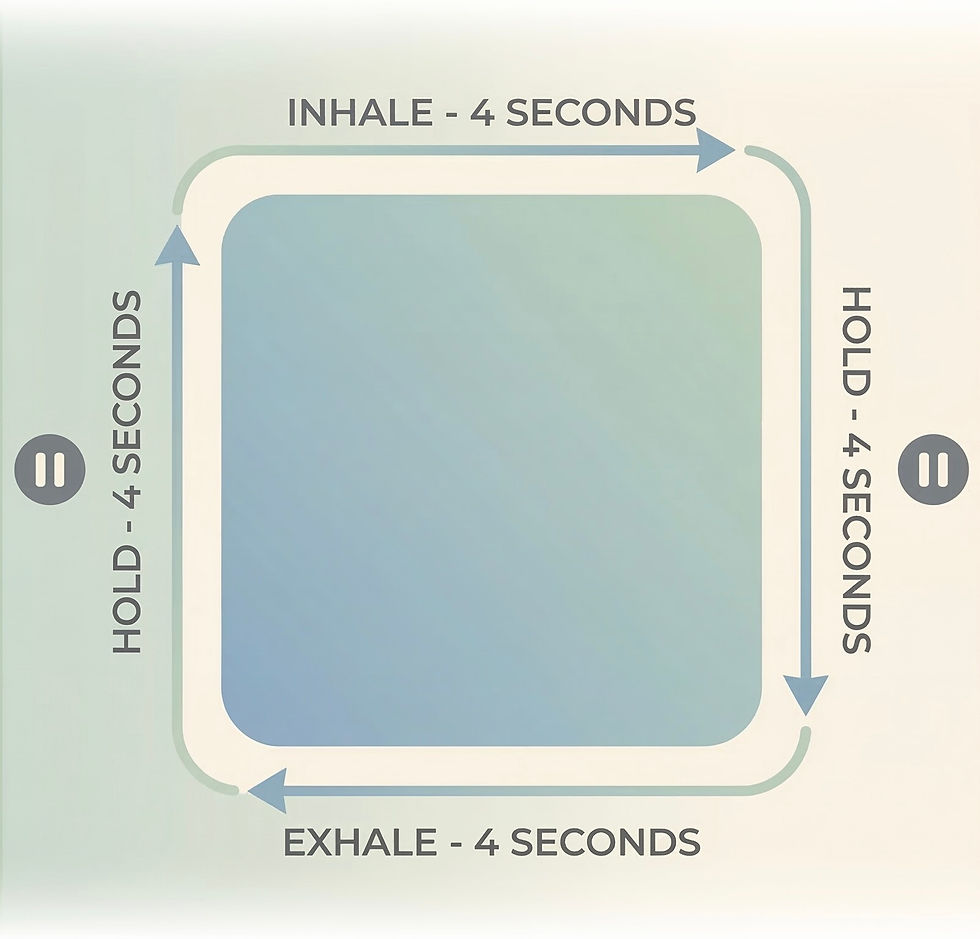
To master this method, simply follow this equal-count cycle for four rounds, or until you feel your shoulders drop and your heart rate steady. Visualize traveling along the four sides of a square as you move through the steps.
INHALE - 4 SECONDS: Breathe in slowly through your nose, feeling your lungs and abdomen expand.
HOLD - 4 SECONDS: Gently pause and hold your breath at the top of the square.
EXHALE - 4 SECONDS: Release the breath slowly and completely through your mouth.
HOLD - 4 SECONDS: Keep your lungs empty before you begin the next inhale.
The Tactical Origin
While the practice of rhythmic, four-part breathing is thousands of years old—rooted in the ancient yogic tradition of Pranayama as Sama Vritti—it was modernized for high-stress environments by former U.S. Navy SEAL Commander Mark Divine. He utilized "Box Breathing" to help elite operators maintain peak focus and emotional control under extreme pressure. For those of us in the helping community, we use this same tactical psychology to move from a state of survival to a state of arrival.

Soul Lesson: You do not have to wait for the world to be quiet to find your peace. Your breath is the bridge that leads you out of survival and back home to yourself.
Rooted in Resilience | Growing in Grace
References
Russell, G., & Lightman, S. (2019). The human stress response. Nature Reviews Endocrinology, 15(9), 525–543. https://doi.org/10.1038/s41574-019-0228-0
Walker, M. (2017). Why we sleep: Unlocking the power of sleep and dreams. Scribner.

Comments